What is LTE: Long Term Evolution Tutorial & Overview
LTE Long Term Evolution was the 4G successor to 3G UMTS that provided improved speeds and performance.
4G LTE includes:
What is LTE
LTE OFDMA / SCFDMA
MIMO
LTE Duplex
LTE frame & subframe
LTE data channels
LTE frequency bands
LTE EARFCN
UE categories / classes
LTE-M (Machine to Machine)
LTE-LAA / LTE-U
VoLTE
SRVCC
LTE Advanced topics:
LTE Advanced introduction
Carrier aggregation
Coordinated multipoint
LTE relay
Device to device, D2D
LTE was the 4G successor to the 3G UMTS system which was developed to provide a further evolution of the mobile telecommunications system available.
Providing much higher data speeds and greatly improved performance as well as lower operating costs, the scheme started to be deployed in its basic form around 2008.
Initial deployments gave little improvement over 3G HSPA and were sometimes dubbed 3.5G or 3.99G, but soon the full capability of LTE was realised it provided a full 4G level of performance.
The first deployments were simply known as LTE, but later deployments were designated 4G LTE Advanced and later still 4G LTE Pro.
Not only was the radio access network improved for 4G LTE, but the network architecture was overhauled enabling lower latency and much better interconnectivity between elements of the radio access network, RAN.
LTE beginnings
3GPP, the Third Generation Partnership Project that oversaw the development of the UMTS 3G system started the work on the evolution of the 3G cellular technology with a workshop that was held in Toronto Canada in November 2004. The work on LTE started with a feasibility study started in December 2004, which was finalised for inclusion on 3GPP release 7. LTE core specifications were then included in release 8.
The workshop set down a number of high level requirements for the new technology:
- Reduced cost per bit
- Increased service provisioning - more services at lower cost with better user experience
- Flexibility of use of existing and new frequency bands
- Simplified architecture, Open interfaces
- Allow for reasonable terminal power consumption
In terms of actual figures, targets for the initial deployments of LTE included download rates of 100Mbps, and upload rates of 50Mbps for every 20MHz of spectrum. In addition to this LTE was required to support at least 200 active users in every 5MHz cell. (i.e. 200 active phone calls). Targets were also set for the latency in IP packet delivery. With the growing use of services including VoIP, gaming and many other applications where latency is of concern, figures need to be set for this. As a result a figure of sub-10ms latency for small IP packets has been set.
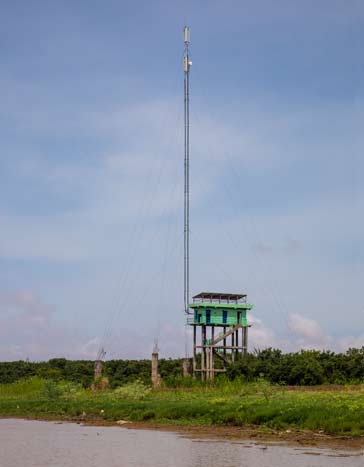
3G LTE evolution
Although there are major step changes between LTE and its 3G predecessors, it is nevertheless looked upon as an evolution of the UMTS / 3GPP 3G standards. Although it uses a different form of radio interface, using OFDMA / SC-FDMA instead of CDMA, there are many similarities with the earlier forms of 3G architecture and there is scope for much re-use.
In determining what is LTE and how does it differ from other cellular systems, a quick look at the specifications for the system can provide many answers. LTE can be seen for provide a further evolution of functionality, increased speeds and general improved performance.
| What is 4G LTE? Comparison with other Mobile Communications Technologies |
||||
|---|---|---|---|---|
| WCDMA (UMTS) |
HSPA HSDPA / HSUPA |
HSPA+ | LTE | |
| Max downlink speed bps |
384 k | 14 M | 28 M | 100M |
| Max uplink speed bps |
128 k | 5.7 M | 11 M | 50 M |
| Latency round trip time approx |
150 ms | 100 ms | 50ms (max) | ~10 ms |
| 3GPP releases | Rel 99/4 | Rel 5 / 6 | Rel 7 | Rel 8 |
| Approx years of initial roll out | 2003 / 4 | 2005 / 6 HSDPA 2007 / 8 HSUPA |
2008 / 9 | 2009 / 10 |
| Access methodology | CDMA | CDMA | CDMA | OFDMA / SC-FDMA |
In addition to this, LTE is an all IP based network, supporting both IPv4 and IPv6.
LTE basics:- specification overview
It is worth summarizing the key parameters of the 3G LTE specification. In view of the fact that there are a number of differences between the operation of the uplink and downlink, these naturally differ in the performance they can offer.
| LTE basic specifications |
||||
|---|---|---|---|---|
| Parameter | Details | |||
| Peak downlink speed 64QAM (Mbps) |
100 (SISO), 172 (2x2 MIMO), 326 (4x4 MIMO) | |||
| Peak uplink speeds (Mbps) |
50 (QPSK), 57 (16QAM), 86 (64QAM) | |||
| Data type | All packet switched data (voice and data). No circuit switched. | |||
| Access schemes | OFDMA (Downlink) SC-FDMA (Uplink) |
|||
| Modulation types supported | QPSK, 16QAM, 64QAM (Uplink and downlink) | |||
| Spectral efficiency | Downlink: 3 - 4 times Rel 6 HSDPA Uplink: 2 -3 x Rel 6 HSUPA |
|||
| Channel bandwidths (MHz) |
1.4, 3, 5, 10, 15, 20 | |||
| Duplex schemes | FDD and TDD | |||
| Mobility | 0 - 15 km/h (optimised), 15 - 120 km/h (high performance) |
|||
| Latency | Idle to active less than 100ms Small packets ~10 ms |
|||
These highlight specifications give an overall view of the performance that LTE will offer. It meets the requirements of industry for high data download speeds as well as reduced latency - a factor important for many applications from VoIP to gaming and interactive use of data. It also provides significant improvements in the use of the available spectrum.
New LTE features
LTE has introduced a number of new technologies when compared to the previous cellular systems. They enable LTE to be able to operate more efficiently with respect to the use of spectrum, and also to provide the much higher data rates that are being required.
- OFDM (Orthogonal Frequency Division Multiplex): OFDM technology was used for the signal format for LTE because it enabled high data bandwidths to be transmitted efficiently while still providing a high degree of resilience to reflections and interference. As data was carried on a large number of carriers, if some were missing as a result of interference from reflections, etc, the system was still able to cope. The access schemes differed between the uplink and downlink: OFDMA (Orthogonal Frequency Division Multiple Access was used in the downlink; while SC-FDMA(Single Carrier - Frequency Division Multiple Access) was used in the uplink. SC-FDMA was used in view of the fact that its peak to average power ratio is smaller than for OFDMA - the lower peak to average power ratio enabling better levels of final RF power amplifier to be achieved - this was and is an important factor for mobile handset battery life.
- MIMO (Multiple Input Multiple Output): One of the main problems that previous telecommunications systems has encountered was that of multiple signals arising from the many reflections that are encountered. By using MIMO, these additional signal paths could be used to advantage and were able to be used to increase the throughput.
When using MIMO, it is necessary to use multiple antennas to enable the different paths to be distinguished. Accordingly schemes using 2 x 2, 4 x 2, or 4 x 4 antenna matrices could be used. While it is relatively easy to add further antennas to a base station, the same was not true of mobile handsets, where the dimensions of the user equipment limited the number of antennas which should be placed at least a half wavelength apart. - SAE (System Architecture Evolution): With the very high data rate and low latency requirements for 3G LTE, it was necessary to evolve the system architecture to enable the improved performance to be achieved. One change was that a number of the functions previously handled by the core network were transferred out to the periphery. Essentially this provided a much "flatter" form of network architecture. In this way latency times could be reduced and data routed more directly to its destination. As part of the upgrade an Evolved Packet Core, EPC was developed to ensure that the packet data was routed as efficiently as possible.
- IP data: 4G LTE is an all IP data system. 3G UMTS had included circuit switched voice, but LTE had not provision for any circuit switched voice. Originally it had been anticipated that operators would supply the data capability and voice would be via OTT applications. As operators would lose out significant revenues as voice, at the time, constituted a major element of the revenue. To overcome this GSMA set the standard for voice connectivity as the Voice over LTE scheme, VoLTE.
VoLTE required the implementation of an IMS core and this slowed roll out of this capability in view of the expense. To help operators overcome this, a limited implementation of IMS was developed and this considerably reduced the capital expenditure required by operators.
4G LTE became the mainstay mobile communications technology. Both first and second generation technologies were focussed on voice and 3G then moved towards mobile data. 4G LTE improved on the mobile data aspects of mobile communications, focussing mainly on this aspect to enable general mobile data connectivity.
Wireless & Wired Connectivity Topics:
Mobile Communications basics
2G GSM
3G UMTS
4G LTE
5G
Wi-Fi
Bluetooth
IEEE 802.15.4
DECT cordless phones
Networking fundamentals
What is the Cloud
Ethernet
Serial data
USB
LoRa
VoIP
SDN
NFV
SD-WAN
Return to Wireless & Wired Connectivity