
Frequency Modulation, FM Modulation Index & Deviation Ratio
The Modulation Index and Deviation Ratio are two key parameters for any FM, frequency modulation signal whether used for broadcasting or two way radio communications.
Frequency Modulation Tutorial Includes:
Frequency modulation, FM
Modulation index & deviation ratio
FM sidebands, bandwidth
FM demodulation
FM slope detector
FM ratio detector
Foster Seeley detector
PLL FM demodulator
Quadrature demodulator
MSK
GMSK
Modulation formats:
Modulation types & techniques
Amplitude modulation
Phase modulation
Quadrature amplitude modulation
Two key parameters of any frequency modulated signal are the modulation index and the deviation ratio. They are widely used when looking at frequency modulated signals and their characteristics.
These two parameters describe some of the basic characteristics of a given FM signal - the modulation index providing a measure of what is effectively the level of modulation and the deviation ratio a measure of the deviation relative to the modulating frequency.
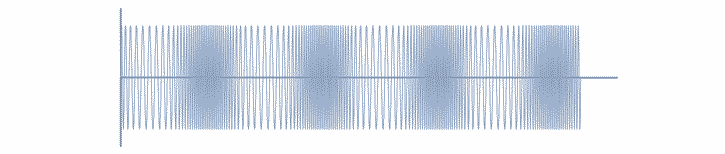
These two figures are key when planning and designing radio communications systems and broadcast transmitters, etc - they define some of the basic parameters of the frequency modulated signal, impacting the sideband levels and the bandwidth required for the signal.
It is important for everything from large FM broadcast transmitters, professional radio communications systems and down to small two way radios or walkie talkies.
Frequency modulation index
The frequency modulation index is the equivalent of the modulation index for AM , but obviously related to FM. In view of the differences between the two forms of modulation, the FM modulation index is measured in a different way.
The FM modulation index is equal to the ratio of the frequency deviation to the modulating frequency.
From the formula and definition of the modulation index, it can be seen that there is no term that includes the carrier frequency and this means that it is totally independent of the carrier frequency.
To give an example of the FM modulation index, take the example where a signal has a deviation of ±5kHz, and the modulating frequency is 1kHz, then the modulation index for this particular instance is 5 / 1 = 5.
Similarly, if the deviation is ±10 kHz and the modulating frequency is s kHz, then this also has a deviation ratio of 5.
As normal audio has a variety of different frequencies contained within the audio sound, the deviation ratio is normally calculated using the maximum audio frequency and maximum deviation.
The figure used from this calculation will then be used to determine the bandwidth and other characteristics of the signal.
FM deviation ratio
One of the issues with the modulation index is that it will vary according to the instantaneous values of deviation and modulating frequency.
On typical audio transmissions, both the frequency deviation and modulating frequency will vary. The frequency deviation will vary according to the level of the audio at that moment. Also the modulating frequency will vary as normal audio consists of a variety of frequencies, which vary to give the speech or music, etc.
For many applications it is more useful to have a figure for the maximum permissible values.
Accordingly the FM deviation ratio can be defined as: the ratio of the maximum carrier frequency deviation to the highest audio modulating frequency.
One common example of the FM deviation ratio can be seen by taking the figures for a typical FM broadcast station. Fir these stations the maximum frequency deviation is ±75 kHz, and the maximum audio frequency for the modulation is 15 kHz.
Using the formula above, this means that the deviation ratio is 75 / 15 = 5.
It is also very easy to calculate the deviation ratio for many other systems as well. For example a communications system may have a maximum deviation of ± 7.5 kHz and a top frequency limit of 3 kHz. For this case the deviation ratio os 7.5 / 3 = 2.5.
FM bandwidth & modulation index
Frequency modulation is used in a variety of applications. Different levels of deviation are used in different situations and applications.
For broadcast FM transmissions the aim is to be able to transmit high quality audio and to achieve this high levels of deviation are used and the bandwidth is wide.
For communications purposes, quality is not the issue, but bandwidth is more important. Accordingly deviation levels are less and the bandwidth is much smaller.
The bandwidth of the FM signal is particularly important because it needs to be wide enough to carry the information correctly, whilst also not occupying to much spectrum. If the bandwidth is too wide, then it can spread outside the required channel and cause interference with other users on other channels.
As spectrum usage increases as more wireless and general radio applications increase (everything from short range wireless communications to traditional voice two way radio communications, data links and many more), the need to manage the frequency spectrum and ensure that transmissions tay within their allotted bandwidths becomes more important.
There are two main classifications for frequency modulated signals and these can be related to the modulation index and deviation ratio.
• Wideband FM:
Wideband FM is typical used for signals where the FM modulation index is above about 0.5. For these signals the sidebands beyond the first two terms are not insignificant. Broadcast FM stations use wide-band FM which enables them to transmit high quality audio, as well as other facilities like stereo, and other facilities like RDS, etc.
The wide bandwidth of wide band FM is enables high quality broadcast transmissions to be made, combining a wide frequency response with low noise levels. Once the signal is sufficiently strong, the audio signal to noise ratio is very good.
Sometimes high fidelity FM tuners may use a wide-band filter for strong signals to ensure the optimum fidelity and performance. Here the quieting effect of the strong signal will allow for wide-band reception and the full audio bandwidth.
For for lower strength signals they may switch to a narrower filter to reduce the noise level, although this will result in the audio bandwidth being reduced. However on balance the narrower bandwidth will give a more pleasing sound when the received signal is low.
• Narrowband FM:
Narrow band FM, NBFM, is used for signals where the deviation is small enough that the terms in the Bessel function is small and the main sidebands are those appearing at ± modulation frequency. The sidebands further out are negligible.
For NBFM, the FM modulation index must be less than 0.5, although a figure of 0.2 is often used. For NBFM the audio or data bandwidth is small, but this is acceptable for this type of communication.
Narrowband FM is widely used for two way radio communications. Although digital technologies are taking over, NBFM is still widely used and very effective. Many two way radios or walkie talkies use NBFM, especially those which conform to the licence-free standards like PMR446 and FRS radio communications systems.
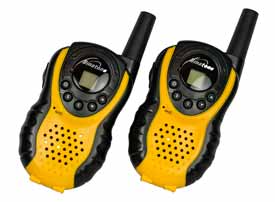
NBFM is ideal for the low cost radio communication systems, especially those that use small walkie talkies because it can be implemented with a minimum of amount of circuitry, most of which is low cost. Although digital technology is becoming much cheaper, narrow band FM is still very cost effective.
These small walkie talkies or other transmitter receivers providing radio communications, normally have a limited audio bandwidtth. This is normal for radio communication systems because high fidelity is not needed - maximum intelligibility is needed along with limited RF bandwidth.
The limited audio bandwidth used within radio communications systems helps reduce the modulation index, and hence the bandwidth occupied by the transmission.
Often the distinction between narrow-band FM and wide-band FM in terms of the modulation index is somewhat arbitrary. However, most FM signals are either wide-band for high fidelity or narrow-band for radio communications where bandwidth restrictions are important. There is normally little in between.
The modulation index and deviation ratio both have important places within the design of broadcast and radio communication systems. The figures define the level of modulation and hence many of the properties of the frequency modulated signal. Accordingly they are important when using FM.
More Essential Radio Topics:
Radio Signals
Modulation types & techniques
Amplitude modulation
Frequency modulation
OFDM
RF mixing
Phase locked loops
Frequency synthesizers
Passive intermodulation
RF attenuators
RF filters
RF circulator
Radio receiver types
Superhet radio
Receiver selectivity
Receiver sensitivity
Receiver strong signal handling
Receiver dynamic range
Return to Radio topics menu . . .