
Samuel F Morse
Samuel Morse was not only invented the Morse Telegraph system, but he was also probably America's foremost portrait painter - find out more in this biography.
Morse Telegraph History Includes:
Morse telegraph history
Morse keys development
Vibroplex & mechanical bug keys
Telegraph sounder
Morse inker
Samuel Morse
Fascinating facts
Morse code SOS message
Morse keys:
Clipsal key
Camelback
Walters Electrical Patt 1056A Post Office key
Steel lever Morse telegraph key
RAF Bathtub Morse key
In many respects Samuel Morse was a most unlikely person to become a leading technology inventor, developing the Morse Code, Morse Keys and the Morse telegraph system, a new communications system that would revolutionise the world.
It has been said that it was the "Internet" of the Victorian age. Later further developments were made in the form of the telephone, allowing voice communications over wires.
Although the name of Morse is well known for his Morse code, comparatively few people realise he was one of the best artists to come from the North American continent.
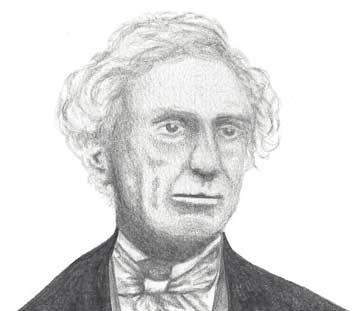
Boyhood for Samuel Morse
Samuel Finley Breese Morse was born on April 27th 1791 in Charlestown (now Charleston) Massachusetts. His father Jedidiah Morse who was an American Congregational minister and an eminent geographer, author on the first American textbook on geography entitled Geography Made Easy (1784).
His parents sent the young Morse to start his education at Phillips Academy in Andover (USA). He proved to be a rather poor and slightly eccentric scholar, but despite this he was moved to Yale College a few years later. Here his two main interests started to grow. The first was associated with the new science of electricity and the second was painting, especially small portraits.
Foreign travel
Morse graduated from Yale in 1810 and became a clerk for a book publisher in Boston Massachusetts. However he found the job uninteresting and he longed to become a painter. So a year later with help from his parents he set out for England to study the traditional style of painting followed there. Four years later in 1815 he returned to America and to his dismay he found that the style of art he had studied was not appreciated. Accordingly he took up portrait painting and became an itinerant artist.
In 1818 when Morse was 27 he married Lucretia Pickering Walker, a young lady from Concord New Hampshire who was just 19 years of age. They were blessed with three children and it is obvious from his writings and reports that he loved her, but Morse needed to earn money to support his family and this took him away from home. During this period he had some notable successes but also some failures as well. In 1822 he completed work on a painting of the House of Representatives in session. This work included small portraits of over 80 members of the house. He had planned to charge an admission fee to see the picture, but the response was so poor that he abandoned the idea. However he did paint a portrait of the Marquis de Lafayette, A French man and a hero of the American War of Independence. This is judged to amongst his finest works.
Video: The Surprising History of the Morse Code & Morse Telegraph
Life started to improve for Morse as his reputation improved. However whilst he was away on business in Washington he received news that his wife died whist she was convalescing from an illness. He now had to face life supporting and looking after three children, but despite these additional responsibilities he devoted himself to his work and achieved considerable success.
Morse also lead an active social life. He was described as a natural leader and mixed with intellectuals and those in high office. In 1826 along with thirty other American artists he founded the national Academy of Design and he was elected president, a post he held until 1845. He also took an active interest in politics.
An idea dawns
Morse decided to travel to Europe to study more about the styles used there. He spent three years visiting France, Italy and Switzerland to look at the forms of art practised there. At this time the electromagnet had just been discovered and a number of elementary forms of telegraph systems had also been proposed. Morse who had retained his interest in electricity heard about the electromagnet and he started thinking about how this new invention could be used. It was during his trip home an idea for a practicable telegraph system started to develop.
As Morse was very busy with his painting as well as lecturing because he was now appointed professor of painting and sculpture at the University of the City of New York (now New York University). As a result he did not devote much time to his idea for a telegraph. It was not for about three years that he was able to develop a prototype. However once he had done this his enthusiasm for the idea grew and in 1837 he gave over all his time to it putting his painting and lecturing to one side.
Unfortunately he did not have all the resources to build the complete system himself and so enlisted the help of a number of friends to get the system off the ground. One named Alfred Vail was gifted with mechanical ideas and many people believe that he actually invented the Morse key. Progress was swift at first and within a year they had developed a system of dots and dashes to represent the letters and numbers. In fact this original code has many similarities to the one used today and it was used for several years before the need arose for it to be changed.
The partners realised that they had to interest the large organisations and government institutions if their idea was to succeed. They gave demonstrations to the American Congress and several other organisations in America but without success. Undeterred by this they even came to England where they hoped for a different response but without success.
Morse was not easily stopped. Having failed to secure any interest with the help of his partners he set out on his own and this time he was successful. He managed to gain the support of Congress and received a grant of $30 000 to set up an experimental line between Baltimore and Washington, a distance of about 40 miles. Despite a number of major setbacks it took less than a year to complete and on the 28th May 1844 he sent the famous first message which read "What hath God wrought?"
With this system operating interest grew very fast. Many of the railroad companies saw the possibilities of the new system and they started to have systems installed. In fact after only four years more than 5000 miles of line had been installed to take the new telegraph system. In addition to this orders soon started to come in from Europe as they heard about the system and how it performed. With all of these orders Morse became very wealthy.
Along with this success came trouble. His former partners filed law suits against him as they felt they had contributed to the system. This legal battle took many years to settle and cost a great deal of money, but eventually Morse won and was able to hold onto all his ideas.
Locust Grove
As a result of his increasing wealth, Morse was able to buy a country home which he named Locust Grove. The 100 acre site was magnificent and overlooked the Hudson River near Poughkeepsie in New York State. A few years after he bought the house, in the early 1850s he commissioned the architect Alexander Davis to rebuild the house in the popular Italian style. It contained 24 rooms and gave him sufficient room for his family as well as a library to hold his extensive book collection as well as other mementoes he had acquired during his life.
Second marriage for Morse
In 1848 as his telegraph system was expanding very rapidly Morse married for a second time. There had been a number of rumours of romantic associations, although nothing came of them until at a family wedding he met a second cousin named Sarah. He was particularly struck by the way she responded to one of his son's who had learning difficulties. Sarah, herself was born with poor hearing and had a speech defect. The relationship grew quickly and they were soon married.
There was some family disapproval of the marriage. Sarah was less than half his age and some thought she might have married Morse for his wealth. Sarah strongly denied this saying that if Morse lost all his wealth she would support him herself. As proof of the strength of their relationship, this period proved to be the happiest in his life.
New Morse code
Although the original code that Morse had derived served its purpose well it had several limitations. Some letters had pauses in them, others had dashes that were longer than others, and there was no provision for accents required by some European languages. These problems meant that the code was not always easy to use. As a result of this a new code was devised and introduced in 1851. It bore many similarities to the old one but it was much easier to send having no spaces in the letters themselves and standard lengths for all the dots and dashes. In fact this code is called the International Morse Code and it is the one that is used today.
Later years
In his later life Morse was generous with his money. He supported many organisations from the religious to the educational. He also supported many itinerant artists because he remembered his years on the road during his younger years.
Morse also received the rare honour of having his statue erected during his own lifetime. In recognition of his great achievements a statue was unveiled on 10th June 1871. Many famous people attended including Theodore Roosevelt Sr. Even today it can be seen in New York's Central Park. Later that evening Morse there was a ceremony at the Academy of Music at which he was the guest of honour.
Morse died at the age of 81 in New York City on 2nd April 1872. He died peacefully after an illness of about two weeks in a home he and Sarah maintained in New York itself as their winter house.
Few people can have achieved so much especially in such diverse fields. He said that he wanted to be remembered chiefly for his invention of the telegraph system, but with the introduction of new and computerised forms of communication the use of the Morse code is decreasing. Conversely interest in his portraits is increasing and he will be remembered for many years to come as an artist. Even so the Morse telegraph system and the Morse code have played such a central part in the communications revolution that it will take many years for his name to be dimmed.
After his death the ownership of Locust Grove passed to the Young family. It stayed with this family until the death of Miss Annette Young who bequeathed the house and 20 acres of ground to the people of New York State. In 1963 it was designated a National Historic Site by the U.S. Department of the Interior and displays the life and work of Samuel Morse. For those wanting to visit, it is located two miles south of Poughkeepsie on U.S. Route 9.
More History:
Radio history timeline
History of the radio
Ham radio history
Coherer
Crystal radio
Magnetic detector
Spark transmitter
Morse telegraph
Valve / tube history
PN junction diode invention
Transistor
Integrated circuit
Quartz crystals
Classic radios
Mobile telecoms history
Vintage mobile phones
Return to History menu . . .