Dynamic RAM, DRAM Memory Technology
DRAM: dynamic random access memory is a form of memory used in many computer systems.
DRAM Memory Tutorial Includes:
DRAM memory technology
How does DRAM work
DRAM types
Memory types:
Memory types & technologies
DRAM
EEPROM
Flash
FRAM
MRAM
Phase change memory
SDRAM
SRAM
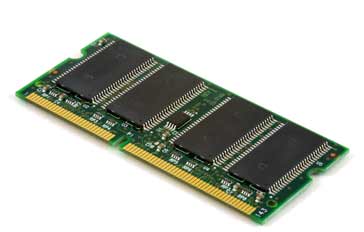
Dynamic RAM, or DRAM is a form of random access memory, RAM which is used in many processor systems to provide the working memory.
DRAM is widely used in digital electronics where low-cost and high-capacity memory is required.
Dynamic RAM, DRAM is used where very high levels of memory density are needed, although against this it is quite power hungry so this needs to be considered if it is to be used.
What is DRAM technology?
As the name DRAM, or dynamic random access memory, implies, this form of memory technology is a type of random access memory. It stores each bit of data on a small capacitor within the memory cell. The capacitor can be either charged or discharged and this provides the two states, "1" or "0" for the cell.
Since the charge within the capacitor leaks, it is necessary to refresh each memory cell periodically. This refresh requirement gives rise to the term dynamic - static memories do not have a need to be refreshed.
The advantage of a DRAM is the simplicity of the cell - it only requires a single transistor compared to around six in a typical static RAM, SRAM memory cell. In view of its simplicity, the costs of DRAM are much lower than those for SRAM, and they are able to provide much higher levels of memory density. However the DRAM has disadvantages as well, and as a result, most computers use both DRAM technology and SRAM, but in different areas.
In view of the fact that power is required for the DRAM to maintain its data, it is what is termed a volatile memory. Memory technologies such as Flash are non-volatile and retain data even when the power is removed.
DRAM technology history
Being a form of memory technology, the dynamic RAM arose out of the developments of the first microprocessors and the accompanying integrated circuit developments.
In the middle to late 1960s integrated circuits started to appear in some advanced electronics products - previously for computer memories, a form of magnetic memory was used. These memories used a single small ferrite toroid for each memory element. Naturally this "core" memory was very expensive, and integrated versions were for more attractive for the long term.
The idea for the DRAM technology appeared relatively early in the integrated circuit semiconductor timeline. An early form was found in a Toshiba calculator that was made in 1966 out of discrete component, and then two years later the idea of the DRAM was we know it today was patented.
The next stage of DRAM technology development came in 1969 when Honeywell who had entered the computer market in a large way asked Intel to fabricate a DRAM using a three transistor cell idea they had developed.
The resulting DRAM IC was designated the Intel 1102 and it appeared in early 1970. However the device had a number of problems and this set Intel to develop a new DRAM technology that operated more reliably. The resulting new device appeared in late 1970 and was called the Intel 1103.
DRAM technology moved a stage further ahead, when in 1973, MOSTEK produced their MK4096. As the part number indicates, this device had a 4 k capacity. However its main advantage was that it incorporated a multiplexed row and column address lines approach. This new approach enabled these memories to fit into packages with fewer pins. The resulting a cost advantage grew when compared to the previous approaches with each increase in memory size. This enabled the MOSTEK DRAM technology to gain more than 75% of the world market share.
Ultimately MOSTEK lost out to Japanese manufacturers of DRAM technology as they were able to manufacture higher quality devices at a lower cost.
DRAM advantages and disadvantages
As with any technology, there are various advantages and disadvantages to using it. Balancing the advantages and disadvantages of using DRAM against another form of technology ensures that the optimum format is chosen.
Advantages of DRAM
- Very dense
- Low cost per bit
- Simple memory cell structure
Disadvantages of DRAM
- Complex manufacturing process
- Data requires refreshing
- More complex external circuitry required (read and refresh periodically)
- Volatile memory
- Relatively slow operational speed
Dynamic RAM, DRAM applications & usage
Dynamic RAM has been available for many years and was used with the earliest home and personal computers. Over a period of around 20 years, internal processor speeds have risen by a factor of around 40, yet in this time the speed of dynamic RAM technology has barely risen - they have seen a factor of two increase at the most.
The mismatch between processor and RAM is more pronounced for dynamic RAM, DRAM than for Static RAM, SRAM. This is because the dynamic RAM is optimised for low leakage and not for speed. However the cost of dynamic RAM is much lower and falling. The cost of a dynamic RAM is about an eighth that of static RAM per bit, although these comparisons vary with time and can only be taken as a rough guide.
As a result SRAMs are used where speed is required, while dynamic RAM, DRAM is used where cost efficient storage of large amounts of data is needed.
DRAM memory is one of the cornerstones of memory technology, being widely used in a host of forms of processor based equipment. DRAM allows for reasonably fast and dense memory to be assembled which is suitable for the working memory in these processor and computer based equipment.
DRAM technology is developing (along with other memory technologies) to meet the ever more demanding requirements of new equipment.
More Electronic Components:
Batteries
Capacitors
Connectors
Diodes
FET
Inductors
Memory types
Phototransistor
Quartz crystals
Relays
Resistors
RF connectors
Switches
Surface mount technology
Thyristor
Transformers
Transistor
Unijunction
Valves / Tubes
Return to Components menu . . .