
Thermal Noise in Electronic Circuits Explained
Understand how thermal noise occurs in electronic circuits, how it is related to resistance and how to calculate it for various resistor values and temperatures.
Electronic & RF Noise Includes:
Thermal noise explained
RF noise topics:
Noise basics
Avalanche noise
Burst noise
Flicker noise
Phase noise
Shot noise
Thermal noise, also called Johnson noise or Johnson-Nyquist noise is always present in electronic circuits and it is one of the major sources of noise in electronic circuits, radio frequency of RF systems and the like.
In RF circuits, it is often a critical parameter, especially for front end receiver circuits where it is one of the key design parameters.
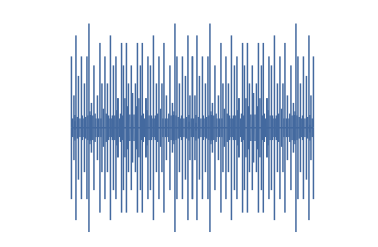
Thermal noise is also important for many audio systems where a good signal to noise ratio can be important to enhance listening enjoyment, and it is also important in many other systems from radio communications systems, to many other applications where low levels of noise can ensure good performance.
Thermal noise basics
Thermal noise is referred to using a variety of names including Johnson noise and Johnson-Nyquist noise. However, these days, the term thermal noise is the most widely used.
This form of noise gained its various names because it was first detected and measured by John B. Johnson in 1926, and the understanding of what it was, was later explained by Harry Nyquist - both were Bell Labs and working together.
The noise is also sometimes called resistor noise because of the fact that it is proportional to the resistance of the conductor being used.
Thermal noise is generated as a result of thermal agitation of the charge carriers which are typically electrons within an electrical conductor. This thermal noise actually occurs regardless of the applied voltage because the charge carriers vibrate as a result of the temperature. This vibration is dependent upon the temperature - the higher the temperature, the higher the agitation and hence the thermal noise level.
Thermal noise, like other forms of noise are random in nature. It is not possible to predict the waveform and therefore it is not possible to reduce the effects by cancellation or other similar techniques.
Thermal noise in circuits
Thermal noise appears regardless of the quality of component used. The noise level is dependent only upon the temperature and the value of the resistance.
Therefore the only ways to reduce the thermal noise content are to reduce the temperature of operation, or reduce the value of the resistance in the circuit.
Other forms of noise may also be present, therefore the choice of the resistor type may play a part in determining the overall noise level as the different types of noise will add together.
In addition to this, thermal noise is only generated by the real part of any impedance, i.e. the resistance. The imaginary part does not generate noise.
Calculating thermal noise
Particularly in radio frequency, RF design and development it is necessary to make thermal noise calculations. Radio receiver applications, RF thermal noise is a key attribute, limiting the sensitivity of the radios.
Calculating the thermal noise and knowing the value can help improve the performance of the whole system, enabling the right steps to be taken to optimise performance and adopt the best approaches.To calculate the thermal noise levels, there are formulas or equations that are relatively straightforward. In addition to this there is an online calculator to provide additional assistance.
Basic thermal noise calculation and equations.
Thermal noise is effectively white noise and extends over a very wide spectrum. The noise power is proportional to the bandwidth. It is therefore possible to define a generalised equation for the noise voltage within a given bandwidth as below:
Where:
V = integrated RMS voltage between frequencies f1 and f2
R = resistive component of the impedance (or resistance) Ω
T = temperature in degrees Kelvin
(Kelvin is absolute zero scale thus Kelvin = Celsius + 273.16)
f1 & f2 = lower and upper limits of required bandwidth
For most cases the resistive component of the impedance will remain constant over the required bandwidth. It therefore possible to simplify the thermal noise equation to:
Where:
B = bandwidth in Hz
Thermal noise calculations for room temperature
It is possible to calculate the thermal noise levels for room temperature, 20°C or 290°K. This is most commonly calculated for a 1 Hz bandwidth as it is easy to scale from here as noise power is proportional to the bandwidth. The most common impedance is 50 Ω.
Thermal noise power calculations
While the thermal noise calculations above are expressed in terms of voltage, it is often more useful to express the thermal noise in terms of a power level.
To model this it is necessary to consider the noisy resistor as an ideal resistor, R connected in series with a noise voltage source and connected to a matched load.
Note: it can be seen that the noise power is independent of the resistance, only on the bandwidth.
This figure is then normally expressed in terms of dBm.
Thermal noise in a 50 Ω system at room temperature is -174 dBm / Hz.
It is then easy to relate this to other bandwidths: because the power level is proportional to the bandwidth, twice the bandwidth level gives twice the power level (+3dB), and ten times the bandwidth gives ten times the power level (+10dB).
Thermal noise calculator
The thermal noise calculation below provides an easy method of determining the various thermal noise values that may be required.
Thermal Noise Calculator
Thermal Noise Calculated for Common Bandwidths
The table below provides the thermal noise floor calculations for various common bandwidths and common applications.
| Bandwidth and Thermal Noise Power | |
|---|---|
| Bandwidth (Δf) Hz |
Thermal Noise Power dBm |
| 1 | -174 |
| 10 | -164 |
| 100 | -154 |
| 1k | -144 |
| 10k | -134 |
| 100k | -124 |
| 200k (2G GSM channel) | -121 |
| 1M (Bluetooth channel) | -114 |
| 5M (3G UMTS channel) | -107 |
| 10M | -104 |
| 20M (Wi-Fi channel) | -101 |
| 40M (Wi-Fi channel) | -98 |
| 80M (Wi-Fi channel) | -95 |
| 160M (Wi-Fi channel) | -92 |
These values for thermal noise power are easy to calculate from the online calculator or the formulas, but the table provides a handy reference.
Effects of thermal noise
Although there are many forms of noise that afect electronic circuits, thermal noise is often the major contributor in many systems and designs are threrefore optimised to reduce this.
It is often wooth bearing in mind the effect that thermal noise can have upon various systems and this can act as a guideline as to which circuits and systems that need to be optimised to reduce the noise.
Audio systems: The background "shhhh" noise that is present in all audio amplifiers and audio systems can be very annoying, particularly during periods of lower volume music, etc. Accordingly the noise level can be a significant factor in audio system design, where circuit designers will seek to educe the levels to increase the listening experience.
Radio receivers: Thermal noise can be a major issue with many radio receiver systems where it limits the sensitivity of radio receivers. Often the sensitivity is defined in terms of the signal to noise ratio. It is important because the noise can mask out signals making them unreadable, or even not discernable.
Data systems: In soem data systems it is possible that the thermal noise could give rise to data errors if the level of thermal noise is high. IT is particularly important when using an analogue signal to trigger a digital level. A small amount of noise oon the analogue signal can give rise to multiple transitions on the output, unless a circuit like a Schmitt trigger is used.
Measurement system: Many measurement systems need to measure signals that are very low in level. Under these circumstances, even small levels of noise, like those cause by thermal noise can give rise to discrepancies and measurement inaccuracies.
There are many circuits where the thermal noise level can be of significant importance. Understanding the mechanisms behind thermal noise help to ensure that its effects can be minimised.
Designing for low noise
When designing systems where the noise performance is important, it is necessary to ensure that the design is carefully thought through from the earliest stages to ensure that the noise performance is optimised.
There are several design guidelines that can be implemented to try to ensure that the noise performance is as good as it can be.
Pay attention to the first stage: Any noise generated in the first stage of a syetm will be amplified by any subsequent stages.This means that the design of the first stage is always the msot important.
Reduce resistance: The equation for the noise in any system indicates that the level of thermal noise is proportional to the resistance. By reducing the values of resistance, characrteristic impedance, etc, thent he level of thermal noise can be reduced. However bear in mind that other forms of noise may increase as the level of current increases as a result of the low resistance.
Reduce bandwidth: The thermal noise in any system is proportional to the bandwidth. Reducng the bandwidth will ahve the effect of reducing the total noise level, although it does not reduce the level of noise in a specific measurement bandwidth, i.e. it will not reduce the level in terms of V/Hz.
Reduce temperature: By reducing the temperature, the level of thermal noise will fall. As an example where this can be done, the front end stages of radios used for radio astonomy are often cooled down to very low temperatures to significantly reduce the thermal noise elvel, and hence inprove the overall radio sensitivity.
Use low noise components: Although components produce noise in many ways, the level of noise in any electronic system or circuit design can be improved by using low noise components: transistors, resistors, etc.
Thermal noise is one of the main limiting factors in a number of areas. In particular it limits the sensitivity of radio receivers because there is a noise floor below which it is not possible to proceed. Some receiver techniques are able to provide signal reception below the noise floor, but the data rate and other factors may be limited. It is therefore useful to be able to calculate the noise for any given instance.
More Basic Electronics Concepts & Tutorials:
Voltage
Current
Power
Resistance
Capacitance
Inductance
Transformers
Decibel, dB
Kirchoff's Laws
Q, quality factor
RF noise
Waveforms
Return to Basic Electronics Concepts menu . . .