
Edwin Howard Armstrong
A biography of the life of Edwin Howard Armstrong inventor of the regenerative radio, superheterodyne radio and wideband FM.
Edwin Armstrong Biography Includes:
Edwin Armstrong
Superhet radio
FM radio
Facts & quotes
Edwin Armstrong was one of the great pioneers of early radio communications or wireless technology.
The biography of Edwin Armstrong reveals a man of great innovation, but one who was exploited by the large companies of the time.
Armstrong's is a life story of great intelligence and technical achievement, but one of great personal turmoil and tragedy. He was primarily a scientist and inventor and not a businessman.
In his life, Edwin H Armstrong was the first to develop the regenerative radio receiver; to develop and construct a superhet or superheterodyne receiver; the super-regenerative receiver; and he also saw the benefits of wideband FM which he again pioneered. He pioneered more in the field of radio communications, than most other inventors that have worked in this field.
Without Edwin H Armstrong, radio communications and broadcast technology would have not developed as fast as it did.
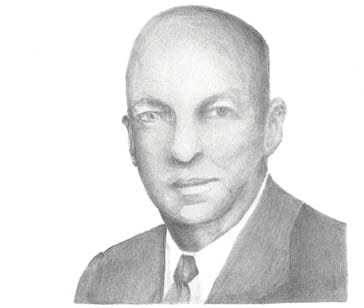
Armstrong's early years
Edwin Howard Armstrong was born on 18 December 1890 born in the Chelsea district of New York City. His parents were John and Emily Armstrong.
His father worked for the American branch of the British publishing organisation, Oxford University Press which published a variety of books including Bibles and classical works. He eventually managed to work his way up the organisation, finally reaching he position of Vice President. His mother was a teacher in a public school. Both his parents were of Christian upbringing, and they actually me at a Presbyterian Church.
When Edwin H Armstrong was only eight years old he contracted rheumatic fever and as a result he was taken out of school for two years. In addition to this the rheumatic fever left him with a twitch or "tic" that occurred particularly when he was excited or stressed.
As a result of his disability and time out of school, he became withdrawn and undertook many solitary activities. He became particularly interested in mechanical and electrical apparatus.
Having heard about the exploits of Marconi, Faraday and others as well as reading books about inventions, the new radio communications technology fired his imagination.
He started by building crystal sets and he also erected a large antenna in the garden of his parents' home. He also tried to investigate any new devices that were discovered and as a result he investigated the new Audion device developed by Lee De Forest. This was a development of the thermionic valve or vacuum tube diode invented by Ambrose Fleming of University College London.
Armstrong moves to Columbia University
Armstrong finished his studies at Yonkers high school and was admitted to Columbia University in New York in 1909. Columbia had a long history, being founded in 1754 as King's College by royal charter of King George II of England in the days when Britain ruled what is now the USA. As such Columbia is the oldest institution of higher learning in the state of New York and the fifth oldest in the United States.
Edwin Armstrong entered the Department of Electrical Engineering and immersed himself in his studies with a level of determination that characterised him for the rest of his life.
Armstrong had a particularly enquiring mind, never taking anything for granted and wanting to fully understand everything. Often the manner of his questioning was mistaken for arrogance, and in fact he did not patience with those who bluffed about their knowledge and experience. As a result of both of these facets of his character, Armstrong did not endear himself to all at the University.
Nevertheless Professor Michael Pupin, an experienced pioneer in the field of electrical science and communications, mentored and supported Armstrong. He even gave him access to a basement laboratory where he was able to develop and test some of his ideas.
Armstrong invents the regenerative radio
One of the issues Armstrong had faced when making crystal sets was that he needed a large antenna and even then the signals were weak and would not be easy to listen to.
Originally De Forest's Audion had only been used for rectifying radio signals, i.e. detecting them. However using this device Armstrong used it not only to amplify, but also provide positive feedback. Armstrong had studied the Audion of triode valve for a number of years, and had a better understanding of its operation than the inventor himself.
Using the Audion in an amplifying mode and with positive feedback, Edwin Armstrong was able to achieve very high levels of gain, and listen to distant signals that would not have been previously possible.
As his idea was revolutionary, Armstrong wanted to patent the idea. He tried to borrow the money from his father to do this, but fearing it would impede the studies, Armstrong's father refused. This meant Armstrong had to sell his beloved motorcycle and borrow from relatives.
Accordingly Edwin Armstrong applied for his patent in 1913 and this was duly granted the following year.
Edwin Armstrong graduates
Armstrong invented the regenerative radio receiver while he was still a student at Columbia University.
He managed to complete all his developments and what was effectively original research while he was an undergraduate student.
Armstrong completed his studies and graduated with a degree in electrical engineering in 1913.
Legal battles with De Forest
once De Forest had seen the way Armstrong was using the Audion, De Forest started to claim the idea was his. Indeed he had observed the howling cause by feedback and had tried to reduce it, but he had never harnessed it or included it in any patents.
It was also clear that de Forest did not properly understand the operation of his Audion, whereas Armstrong had a much better grasp.
Accordingly after the end of the First World War, De Forest instigated legal proceedings against Armstrong., and being backed by A T & T who had purchased the patents, he could bring a far greater amount of force to bear. Initially Armstrong won, but after many appeals and repeat actions, De Forest finally won in 1934, on a technicality rather than technical merit at the US Supreme Court. Despite this, the scientific community was behind Armstrong.
More Famous Scientists in Electronics and Radio:
Volta
Ampere
Armstrong
Appleton
Babbage
Bardeen
Brattain
Edison
Faraday
R A Fessenden
Fleming
Heaviside
Hertz
Ohm
Oersted
Gauss
Hedy Lamarr
Lodge
Marconi
Maxwell
Morse
H J Round
Shockley
Tesla
Return to History menu . . .