
Li-ion Lithium Ion Battery
Lithium ion, Li-ion batteries are used for many applications being used as electronic equipment batteries, electric vehicles batteries , for power tools, solar PV system batteries, etc.
Lithium Ion Battery Includes:
Li-ion technology
Types of lithium ion battery
Lithium polymer battery
Li-ion charging
Li-ion advantages & disadvantages
How to preserve lifetime of lithium ion batteries
Battery Technology Includes:
Battery technology overview
Battery definitions & terms
Zinc carbon
Alkaline
Zinc air cells
NiCad
NiMH
Li-ion
Lead acid
Lithium ion batteries are rechargeable batteries and cells that provide improved levels of capacity combined with reliable operation when compared to other forms of rechargeable battery and cell such as Nickel Cadmium, Ni-Cd and Nickel Metal Hydride, NiMH.
As a result of their characteristics, Lithium Ion, or Li-ion batteries have become the battery technology of choice in a variety of areas. Li-ion batteries are used almost exclusively in mobile phones, laptops, e-readers and many other electronic gadgets.
In addition to this, Li-ion technology is also used being used batteries for power tools, electric vehicle batteries, batteries for PV systems and many more applications.
With the increasing reliance on mobile and portable power, the use of Li-ion battery technology is set to increase still further.
It is worth noting that lithium ion cells and batteries rechargeable and they are different to lithium batteries or cells that are primary cells and not rechargeable.
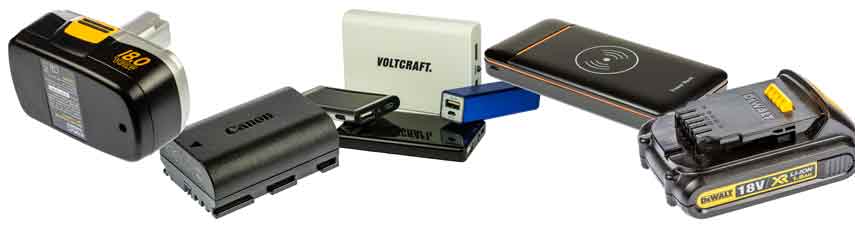
Growth & development of Li-Ion batteries
Understanding how the lithium ion battery was developed gives a basic insight into its operation, and it is also useful to see how it has developed and how it may develop in the future.
Lithium battery technology has taken many years to develop. It offers distinct advantages over other older rechargeable battery technologies such as nickel cadmium and nickel metal hydride. Despite the advantages of lithium ion it has taken years to perfect and enable it to reach a maturity level where it could be widely used. Now it is used in many areas and its use has enabled may technologies such as mobile phones, laptops and other items of everyday use to move forwards.
The idea for lithium ion battery technology was first proposed in the 1970s by M Whittingham who used titanium sulphide for the cathode and lithium metal for the anode. Although the cell produced power, it could be unstable as lithium whiskers from the anode grew into the electrolyte and eventually touched the cathode.
Work was undertaken at the University of Pennsylvania to enable a graphite electrode to be used with lithium ions in the electrode. This was a major advance, although it was not take up immediately by other advances in lithium ion technology.
However other techniques associated with charging needed to be solved before a viable cell could be made. In 1979 J Goodenough demonstrated a rechargeable lithium ion cell using Lithium Cobalt Oxide for the positive electrode and lithium as the negative one.
The next stages in producing a workable production cell were to be able to enable recharging action with lithium in graphite. This was achieved by Rachid Yazami in 1979. It then took until 1985 before a rechargeable lithium ion cell was developed that could be manufactured in large scale production quantities. Akira Yoshino used carbonaceous material into which would accept lithium ions as one electrode, and lithium cobalt oxide, LiCoO2 as the other. The use of Lithium Cobalt Oxide was important because it is stable in air unlike lithium itself, and this made this cell structure more stable chemically and far less dangerous.
Lithium ion, Li-ion battery technology basics
Although there are various different forms of lithium ion battery technology, there are several common elements in common.
A lithium ion battery, or cell of whatever form has four main constituents:
Cathode: This is the positive electrode and it is typically made from a lithium based metal oxide of some form. There are several different lithium ion battery technologies, so the exact format will change from one type to the next.
Anode: This is the negative electrode of the lithium ion battery and it is generally made from carbon, normally in the form of graphite.
Electrolyte: The electrolyte is the located between the two electrodes within the cell. It is often a mixture of organic carbonates such as ethylene carbonate, diethyl carbonate, etc.
Separator: In order to prevent the two electrodes touching a separator is placed between the anode and cathode. This absorbs the electrolyte, and enables the passage of ions, but prevents the direct contact of the two electrodes within the lithium in cell.
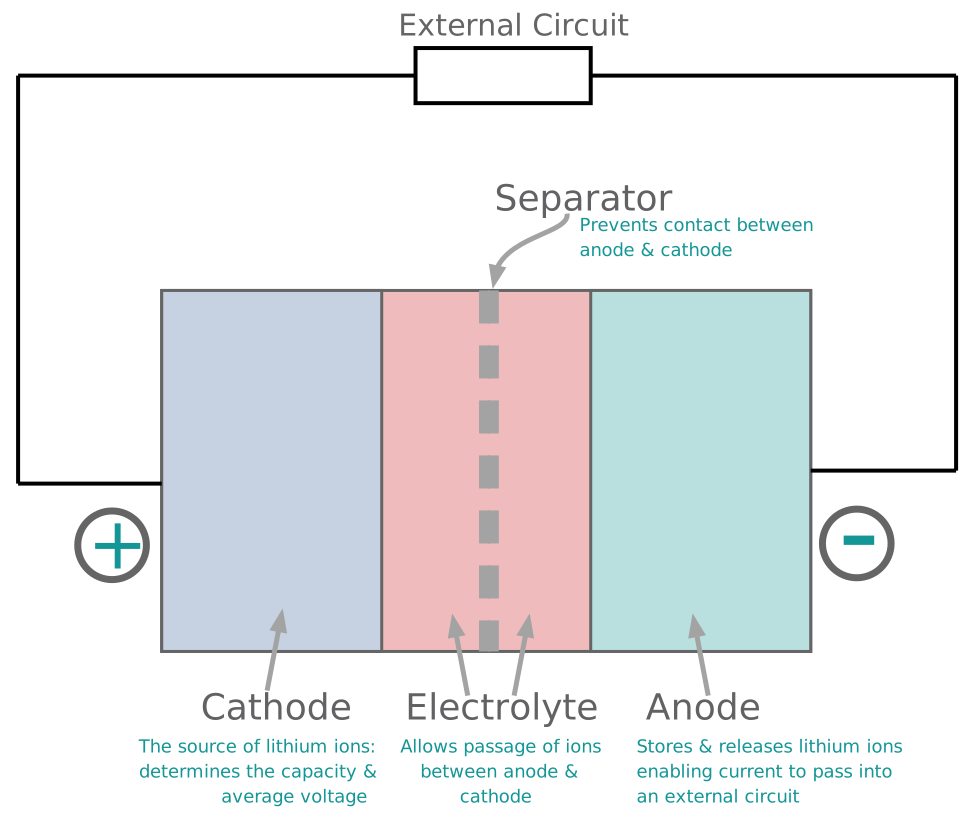
During the overall cycle there are two processes associated with movement of the lithium ions:
- Intercalation : The process where the lithium ions in the lithium ion battery are inserted into the electrode is called intercalation.
- Deintercalation : This is the reverse process and occurs when lithium ions are extracted from the electrode, i.e. they move back out.
To give a more in-depth explanation, during the discharge of the lithium ion cell when it is providing current to an external circuit, an oxidation reaction occurs at the anode. This produces lithium ions and free electrons, and the lithium ions pass through the electrolyte to the cathode - the electrons flow through the external circuit. They then recombine at the cathode in the opposite of an oxidation reaction, i.e. a reduction reaction.
In this way, the chemical energy stored in the lithium ion cell is converted into electrical energy which can be used in electrical and electronic circuits.
During the charging cycle, the reactions occur in the reverse direction with lithium ions passing from the cathode through the electrolyte to the anode. The electrons provided by the external circuit then combine with the lithium ions to provide the stored electrical energy.
It should be remembered that the charging process is not totally efficient - some energy is lost as heat, although efficiency levels of around 95% or a little less are typical.
Lithium ion battery management
Lithium ion batteries need to be operated within relatively strict limits. They do not like being over charged, totally discharged, subjected to short circuits and the like.
This is particularly important for many applications including electric vehicle batteries, power banks, mobile phone batteries, batteries for PV systems and the like where they are constantly being charged and discharged and whee large levels of charge are stored.
Lithium batteries are invariably paired with a battery management system. This tracks the level of charge, the temperature, voltage, and a number of other factors.
The lithium battery management system manages the charging and discharging, flagging the level of charge, cutting the battery from supplying more charge when it is almost exhausted (they do not like being completely discharged), managing the charge cycle and applying the required format for charge during the charging as two or more modes are normally used. It also terminates the charge when the battery or cell is fully charged. The management function also provides short circuit protection and over temperature protection as well.
Accordingly the battery management system is an integral part of any lithium ion battery system.
Lithium ion battery variants
Although lithium ion batteries are generally referred to by their generic name, there are actually several different types of lithium ion battery.
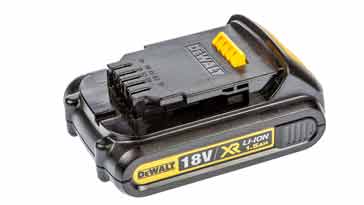
The various types of lithium ion battery have very similar characteristics, but each with its unique attributes. Accordingly the different types are used in different applications.
| Lithium Ion Battery Technologies Summary |
||||
|---|---|---|---|---|
| Name | Constituents | Abbreviation | Major characteristics | Applications |
| Lithium Cobalt | LiCoO2 | LCO | High capacity | Cellphones, laptops, cameras |
| Lithium Manganese Oxide | LiMn2O4 | LMO | Lower capacity | Power tools, medical, hobbyist |
| Lithium Iron Phosphate | LiFePO4 | LFP | Lower capacity | Power tools, medical, hobbyist |
| Lithium Nickel Manganese Cobalt Oxide | LiNiMnCoO2 | NMC | Lower capacity | Power tools, medical, hobbyist |
| Lithium Nickel Cobalt Aluminium Oxide | LiNiCoAlO2 | NCA | Electric vehicles and grid storage | |
| Lithium Titanate | Li4Ti5O12 | LTO | Electric vehicles and grid storage | |
Lithium polymer batteries
A new and exciting development for lithium batteries is that of the lithium polymer variant. Although it is not a different battery technology in the same way as those using different anode and cathode materials, it does use a different form of electrolyte.
Using this different electrolyte, the batteries can be made in much more formats, even being bendable.
The lithium polymer battery can use the same anode and cathode materials as the other batteries giving similar performance, but it is able to be manufactured in a variety of shapes far more easily. This makes it an ideal option for equipment manufacturers needing specific shapes to fit the small form factors of their electronic equipment designs.
Lithium ion battery formats
Lithium ion cells can be made in a variety of shapes and as might be expected there are a number of standard format that have been adopted. This enables machinery to be set up for large runs of cells and batteries all of the same size, thereby reducing costs.
Lithium ion cells and batteries do not normally conform to the AAA, AA, C, and D formats used for many primary cells and for Nickel Cadmium, Ni-Cd or Nickel Metal Hydride, NiMH, cells. Instead they use different formats.
There are obviously different formats for different applications, but generally the same principles are used.
Small Cylindrical Cells: The cylindrical format is used in a variety of applications and often batteries are made up from a series of these cells. Typical sizes are 18 × 65 mm, 21 × 50 mm, and 26 × 65 mm.
Large power cylindrical: In many ways these are a large version of the smaller cylindrical type, but typically with large screw terminals to ensure effective low resistance current transfer.
Pouch format: The style of battery known as the 'pouch' consists of a flat foil pouch style which can be likened to a chewing-gum packages. This format is generally used for lithium-polymer cells and batteries as these ones are easy to manufacture to specific shapes, allowing electronic gadget and equipment manufacturers to have specific shaped batteries to fill the available space.
Prismatic: This format is typically a flat or rectangular shaped battery, often used for powering electronic gadgets and the like. Typical sizes are 5 × 34 × 50 mm and 10 × 34 × 50 mm, although like other styles, vendor specific sizes are also available, and others that are made to order.
Large plastic rigid case: These large rigid cases tend to be used for larger electrical equipment and vehicles.
Li-ion batteries usage guidelines
Lithium ion batteries or Li-ion batteries can be relatively expensive. It therefore pays to follow simple guidelines that can help ensure the maximum life is obtained from them.
Like many different items, it pays to take care of these batteries because the cost of replacement can often be quite large.
mobile phones are often replaced when the battery performance has dropped, and the cost of the replacement of electric car batteries is very large.
Taking a few precautions with their use enables the life of the Li-ion battery to be maximised. Although there is a maximum lifetime, poor usage and care will considerably shorten this.
Li-ion batteries and cells are now one of the dominant technologies in use having taken over from the older nickel cadmium batteries and nickel metal hydride, NiMH batteries.
Lithium ion batteries are used for powering many different items from small earbuds and earphones through to mobile phones, tablets, laptops and a host of other electronic gadgets and items. Cordless power tools make widespread use of li-ion batteries as do other electrical items. Many automobiles are now battery powered and lithium ion technology provides a much better power to weight figure and accordingly they are widely used for this area as well.
With a huge amount of development being invested in li-ion battery technology, performance levels will increase and along with this so will their usage.
More Electronic Components:
Batteries
Capacitors
Connectors
Diodes
FET
Inductors
Memory types
Phototransistor
Quartz crystals
Relays
Resistors
RF connectors
Switches
Surface mount technology
Thyristor
Transformers
Transistor
Unijunction
Valves / Tubes
Return to Components menu . . .